When a Good Reputation Alone Isn't Enough
In today's digital-first world, having solid technical expertise and a strong reputation within your existing network is no longer sufficient to grow a business. Geomap, an Indonesian surveying and geospatial mapping firm, faced a challenge that is remarkably common among small and medium-sized enterprises (SMEs): they existed, but they weren't visible.
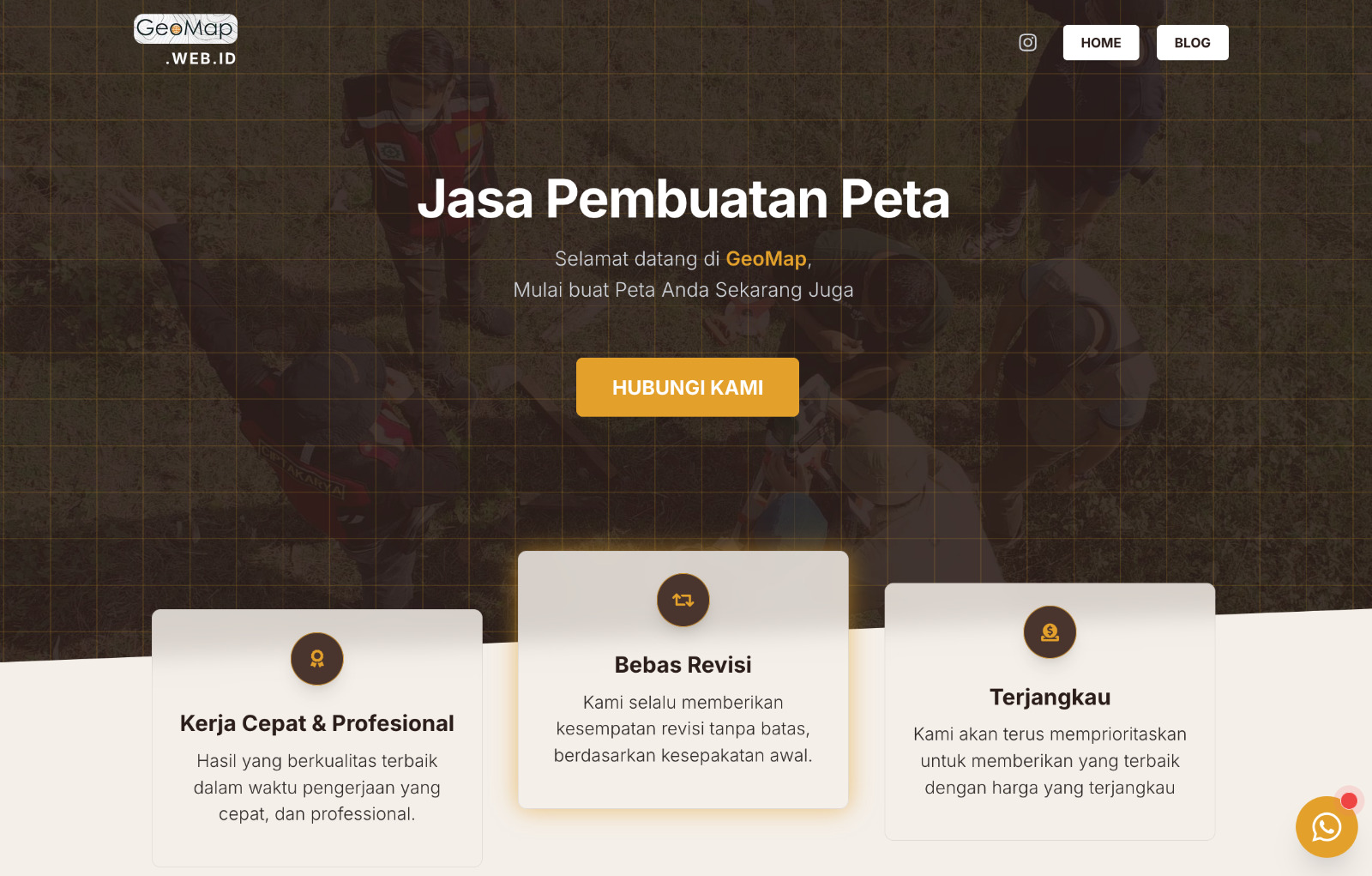
Before partnering with katili.dev, Geomap operated almost entirely through personal connections, word-of-mouth referrals, and relationships from previous projects. No website. No online portfolio. No way for prospective clients to independently verify who they were and what they'd done.
Research published by INDEF (Institute for Development of Economics and Finance) in 2024, titled The Role of Digital Platforms in the Development of SMEs in Indonesia, found that 88.37% of SMEs experienced an increase in annual revenue after digitalizing their business operations. Yet many business owners still hesitate to take that first step — including Geomap, who initially believed that websites were only relevant for product-based businesses, not technical service firms.
Client Profile: Geomap Before Having a Website
Geomap is a geospatial services company offering land surveying, mapping, and geospatial data consulting. With over five years of operations, their project portfolio includes mapping plantation areas, surveys for construction needs, and geospatial data compilation for regional government agencies.
However, their digital presence before partnering with katili.dev looked like this:
| Aspect | Condition Before Website |
|---|---|
| Online presence | None (WhatsApp number only) |
| Portfolio | Manually sent as PDF to prospects |
| Proposal process | In-person or over the phone |
| Client reach | Limited to existing network |
| Initial credibility | Difficult for new clients to verify |
The core problem was straightforward: whenever a new prospective client searched for Geomap online, they found nothing. In the context of B2B services and technical work, this absence is frequently interpreted as unprofessional — or even untrustworthy — regardless of how excellent the actual fieldwork quality might be.
As the INDEF study highlighted, 79.13% of SMEs adopted digital channels for greater selling convenience, and 72.83% did so to reach a wider audience. For Geomap, both of these were genuine pain points that needed to be solved.
The Process: From First Consultation to Launch
The development of Geomap's website with katili.dev followed a structured, multi-stage process:
1. Consultation & Needs Discovery
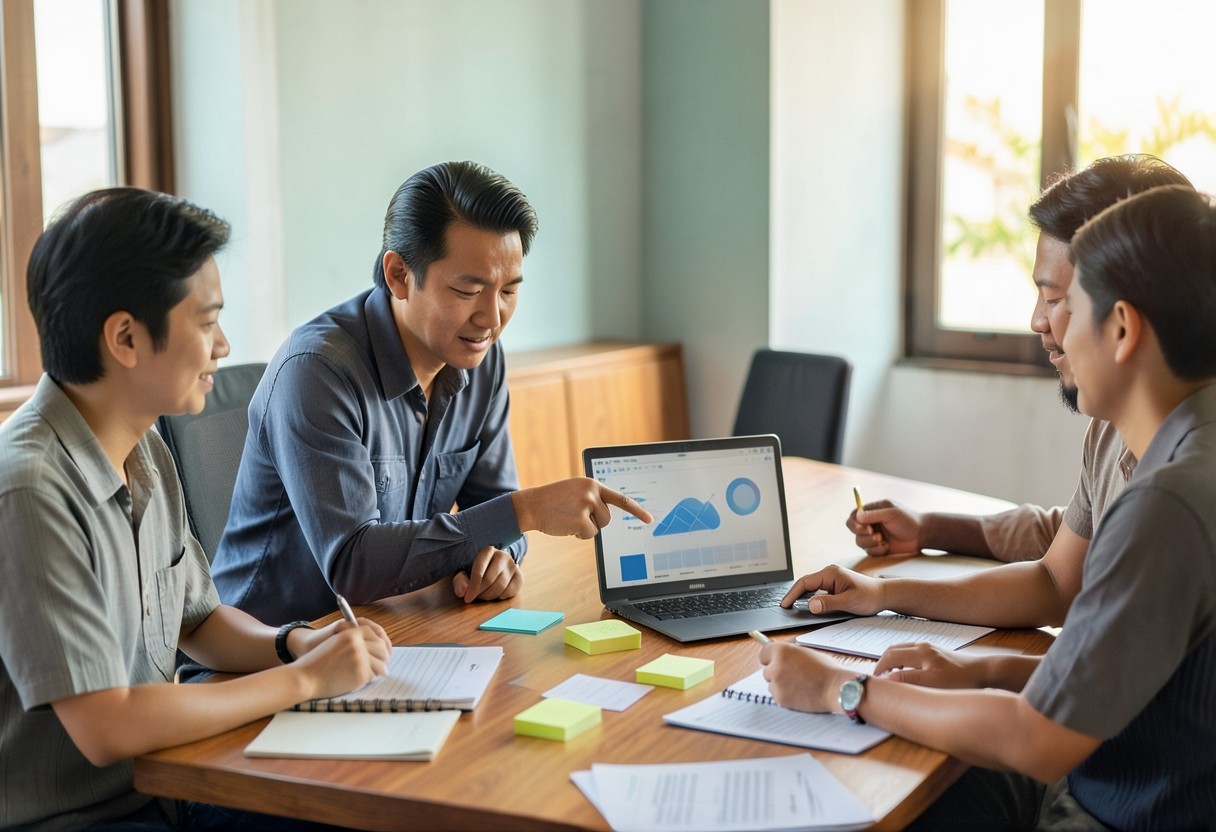
The project began with an in-depth discovery session to understand Geomap's business DNA: who their target clients were, what their core value proposition was, and how a prospective client typically made the decision to reach out. From this session, a key strategic goal was established: the website needed to function as a passive sales tool — one that could convince prospective clients before any direct conversation took place.
2. Content Architecture Design
The website structure was designed around three pillars:
Trust: a project portfolio page featuring strong visual documentation of completed work
Service clarity: technical descriptions written accessibly for non-specialists
Clear calls-to-action: a contact form and WhatsApp integration to lower friction for prospects reaching out
3. Development with Laravel & Tailwind CSS
The website was built using a modern, production-grade technology stack:
| Component | Technology |
|---|---|
| Backend & CMS | Laravel (PHP Framework) |
| Frontend Styling | Tailwind CSS |
| Blog & Content | AI Blog Generator (integrated) |
| Hosting | Optimally configured VPS |
| SSL & Security | Let's Encrypt + server hardening |
The choice of Laravel was deliberate. As a mature PHP framework, Laravel provides full flexibility to build custom features such as a project portfolio management system, a quote request form, and an SEO-optimized blog — all without being constrained by the limitations of third-party page builders or generic CMS templates.
Tailwind CSS was selected for its ability to produce responsive, consistent UI designs that are easy to iterate upon without bloated custom CSS.
4. AI Blog Generator Integration
One of the standout features implemented was an AI Blog Generator — a system designed to help the Geomap team produce technical blog content more efficiently. This matters because relevant, high-quality blog content is one of the most effective and sustainable ways to build organic search visibility.
With the AI Blog Generator in place, Geomap no longer needed to rely on external content writers for their technical articles — a previous bottleneck, given that geospatial topics require domain-specific understanding that most general writers lack.
5. QA Testing, Revisions & Go-Live
Before launch, the website underwent a quality assurance process covering performance benchmarks, cross-device responsiveness testing, and a joint content review with the Geomap team. The entire journey — from the first consultation to the launch date — was executed within a planned timeline, with transparent communication at every milestone.
Results: What Changed After the Website Went Live
The changes Geomap experienced after their website launched fell into two primary categories:
Improved Credibility
The most immediate shift was in how prospective clients perceived the business. When a new prospect was referred to Geomap — or found them through organic search — they could now review the project portfolio, explore service descriptions, and even read technical blog articles before speaking to anyone on the team.
The time-consuming "initial validation" process that previously required sending PDF proposals, lengthy phone explanations, or premature in-person meetings was significantly compressed. The website did the groundwork automatically.
More Structured, Higher-Quality Leads
With a well-integrated contact form and WhatsApp button on the website, Geomap began receiving leads that were already informed — prospects who had already read through the services page and arrived at the conversation with meaningful context. The quality of initial discussions improved substantially compared to the previous cold-start approach.
This aligns with INDEF's finding that 66.28% of SMEs that digitalized experienced up to a 50% increase in average annual revenue.
| Aspect | Before Website | After Website |
|---|---|---|
| Credibility verification | Manual, slow | Instant via website |
| New leads per month | Existing network only | Includes organic search |
| Quality of initial conversations | Starting from scratch | Prospects already briefed |
| Google presence | None | Indexed and growing |
Lessons Other Businesses Can Take Away
Geomap's story is not an exception — it reflects the situation of countless technical service businesses in Indonesia that continue to operate below the digital radar. Here are the key takeaways applicable to similar businesses:
1. A Website Is Infrastructure, Not a Luxury
Just as a business needs a functioning phone number, a website is now a fundamental piece of infrastructure. As noted by the Indonesian government's digitalization initiative, digital transformation has become a necessity — not an option — and this applies to B2B technical service firms just as much as it does to consumer-facing product businesses.
2. Start from Business Goals, Not Technology
Geomap didn't need the most feature-rich website on the internet. They needed a website that could answer a prospect's key questions and inspire enough confidence to reach out. The design and technology choices followed from that business objective — not the other way around.
3. Content Is a Long-Term Asset
The technical blog built with the help of the AI Blog Generator isn't just for branding — it's an SEO asset that continues to work even when the Geomap team is out in the field. Every article that answers a prospective client's question is a potential entry point into the business.
4. Choose a Scalable Stack
With Laravel as the foundation, Geomap's website is not locked into the limitations of any third-party platform. If the team later wants to add features like a project cost estimator, a booking system, or integrations with geospatial tools, all of that can be built on the same foundation without migrating to a different system.
5. Structured Process Drives Meaningful Results
One of the factors that made this project run smoothly was the systematic discovery process at the outset. Without a deep understanding of the client's business context, the risk is producing a website that merely exists — rather than one that actively works for the business.
Closing Thoughts
Geomap is a concrete example of the fact that investing in a website isn't about following trends — it's about ensuring your business can be found, trusted, and contacted by the right people at the right moment.
In an increasingly competitive digital landscape, delaying the decision to build a professional website effectively means allowing prospective clients to end up with competitors who are simply easier to find online.
If your business is in the same position Geomap was before — excellent work quality, but hard to reach digitally — it may be time to change that.
References
Indonesia.go.id. (2024). Digitalisasi Dorong Ekonomi Inklusif Usaha 'Wong Cilik' [Digitalization Drives Inclusive Economy for Small Businesses]. Portal Informasi Indonesia. https://indonesia.go.id/kategori/editorial/8834/digitalisasi-dorong-ekonomi-inklusif-usaha-wong-cilik
Izzudin Al Farras, INDEF. (2024). Hasil Studi INDEF: Peran Platform Digital Terhadap Pengembangan UMKM di Indonesia [INDEF Study Results: The Role of Digital Platforms in SME Development in Indonesia]. Institute for Development of Economics and Finance. https://indef.or.id/wp-content/uploads/2024/01/Izzudin-Al-Farras-INDEF-Hasil-Studi-INDEF-Peran-Platform-Digital-Terhadap-Pengembangan-UMKM-di-Indonesia.pdf