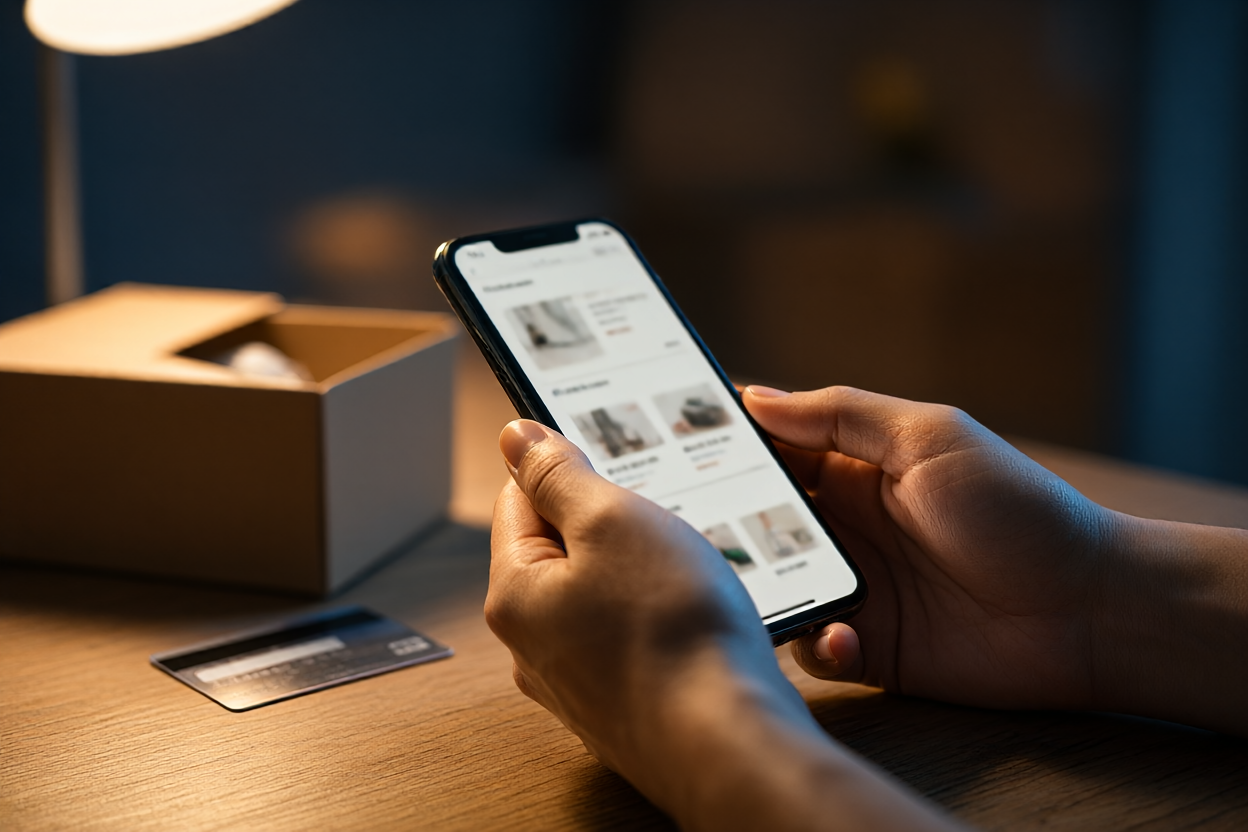
Big Discounts, Big Risks
December 12 has become one of Indonesia's biggest online shopping days. Marketplaces hand out vouchers, social media shops slash prices, and "flash sale" notifications arrive non-stop. For scammers, it is harvest season: people are in a hurry, tempted by low prices, and rarely double-check before sending money.
The numbers are serious. According to Kontan, the Indonesia Anti-Scam Centre (IASC) — the fraud-handling centre run by the Financial Services Authority (OJK) together with the PASTI task force — received 702,342 scam reports between its launch on 22 November 2024 and 30 September 2026. Of those, 334,756 came in through financial institutions such as banks and payment providers, while 367,586 were filed directly by victims. A month later, Bisnis.com reported the total had risen to 737,686 reports as of 28 October 2026, with 1,471,112 accounts reported, 743,589 accounts blocked, and IDR 967.5 billion in victims' funds saved.
Throughout that period, shopping-transaction fraud has consistently ranked among the most-reported scam types. This article covers the schemes to watch for ahead of 12.12, prevention checklists for buyers and sellers (small businesses), and how to report as fast as possible.
The Most Common Online Shopping Scams
1. Fake shops and "too good to be true" prices
The classic scheme remains the most effective: a social media shop or a cloned website offers branded goods far below market price. Buyers are told to transfer directly to a personal bank account "to get a special price", then the goods never ship and the account disappears.
2. Moving the deal off-platform
A fake seller (or buyer) asks to continue on WhatsApp or DM "to make it faster" or "to skip admin fees". Once you leave the marketplace's escrow system, your transaction protection is gone.
3. Phishing links disguised as vouchers, tracking numbers or couriers
Messages like "congratulations, you won a 12.12 voucher", "your parcel is on hold, track it here", or an APK file posing as a parcel photo are gateways to account and banking-data theft. One tap can hand over your marketplace or mobile banking account.
4. Impersonation: posing as customer service, a bank, or a courier
Scammers call or message pretending to be marketplace or bank customer service, then ask for an OTP code "to cancel a duplicate order" or "to verify a refund". That OTP is really the key to draining your account.
5. Schemes powered by AI
This is the growing concern. According to Kontan, OJK recorded 1,379 scam reports indicating the use of artificial intelligence from IASC's launch through the end of June 2026 — up from just 13 reports in late 2024. The most common scheme is investment fraud using deepfake videos or photos of public figures, followed by AI-based trading robot offers and online shopping scams that invoke AI. There are also fake calls using voice cloning that mimic the voice, and even the face, of someone the victim knows. OJK says AI makes scams harder to spot because perpetrators can create identities and conversations that look highly convincing.
In a shopping context, this can look like a doctored "testimonial" video of a celebrity promoting a fake shop, or a call in a family member's voice asking you to transfer money "to pay for a held cash-on-delivery parcel".
Buyer Checklist: Before You Tap "Pay"
- Stay on the platform. Pay only through the marketplace's official payment system, never to a personal account.
- Check the shop's reputation: account age, number of reviews, and real product photos from other buyers.
- Be suspicious of unreasonable prices. Apply OJK's 2L principle: Logical and Legal.
- Never share OTPs, PINs or passwords — official customer service will never ask for them.
- Don't tap links or install APKs from messages you didn't request; check tracking directly in the courier or marketplace app.
- Re-verify money requests from "family" or "friends" by calling back the number you have saved, or by asking something only that person would know.
- Turn on transaction alerts and two-factor authentication for mobile banking and e-wallets.
Seller and Small Business Checklist: Protect Your Shop and Customers
Sellers are targets too — from fake transfer receipts to shop accounts hijacked to defraud customers.
- Check your account statement, not a screenshot. Edited transfer receipts are easy to fake; ship only after the funds have actually arrived.
- Secure your shop account with a unique password and two-factor authentication; limit admin access to people who need it.
- Publish your official channels (WhatsApp number, business-name bank account, website address) in your bio and shop page so customers can tell impostors apart.
- Watch for fake accounts copying your name and product photos, and report them to the platform.
- Educate customers: make clear that your shop never asks for OTPs or transfers to an employee's personal account.
- If you run your own website, make sure HTTPS is enabled, your CMS and plugins stay updated, and payment forms cannot be injected with third-party scripts.
Got Scammed? Report It Immediately
This is the most important part: how fast you report determines your chances of getting money back. Scam proceeds are usually moved through layer after layer of accounts within hours. The sooner a report comes in, the more likely IASC and the banks can freeze the funds before they move. The IDR 967.5 billion saved shows the mechanism works — but only for reports that arrive in time.
Recommended steps:
- Contact your bank or e-wallet provider right away and ask for the transaction to be flagged as fraud.
- Report to IASC through its official site, iasc.ojk.go.id. Prepare your ID, a short timeline, the destination account or number, the amount lost, and proof of transfer.
- Keep all evidence: chat screenshots, shop links, the scammer's phone number, and transaction history. Don't delete chats, even if you feel embarrassed.
- Report the scammer's account to the platform (marketplace or social media) so it can't claim more victims.
- If you need help, call OJK's contact line at 157.
| Situation | First action |
|---|---|
| Already transferred money to a scammer | Call your bank, then report to IASC |
| OTP or password already shared | Change passwords, block the card or account via your bank |
| Shop account taken over | Contact platform support, warn your customers |
| Received a suspicious call or video | Hang up, verify via the number you have saved |
Closing Thoughts
The 12.12 season should be fun, not the start of a loss. The pattern is almost always the same: a price that is too tempting, pressure to act fast, and a push to leave official channels — now wrapped in AI-generated fake voices and faces. Make a habit of pausing before you pay, and if you have already been scammed, don't wait: a fast report is your best chance of getting your money back.
For small businesses, online shop security is also part of customer trust. A secure website, clearly published official channels, and consistent customer education cost far less than rebuilding a reputation after a scam.